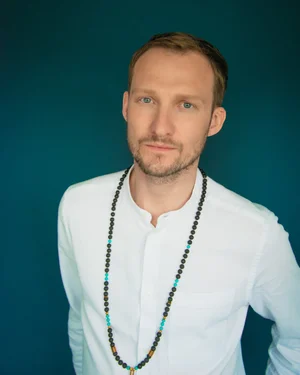
Gay Sex Addiction: Why It Might Not Be An Addiction

There is hope for gay sex addiction with the right approach. And is it really an addiction?
If you've ever typed "am I a sex addict?" into Google at 3am after another night of scrolling, swiping and acting out, only to feel that familiar wave of shame crash over you the moment it's done, you're not alone.
And you're not broken.
As a Somatic Sex Coach and Clinical Hypnotherapist who works primarily with gay men, I hear some version of this story almost every week. Men who feel trapped in cycles with porn, hookup apps, anonymous sex or compulsive masturbation. Men who've tried willpower, tried deleting the apps, tried promising themselves it won't happen again. Men who are exhausted, ashamed and convinced that something is fundamentally wrong with them.
The internet tells them they have a sex addiction. The recovery industry offers 12-step programmes, abstinence protocols and a framework borrowed directly from substance abuse treatment. And while that approach genuinely helps some people, for many gay men it does something far more damaging: it layers more shame on top of an already shame-soaked experience.
I want to offer a different perspective. One rooted in somatic sexology, Taoist erotic practices and over a decade of therapeutic experience. One that starts not by fighting your sexual energy, but by finally learning to listen to it.
Why "Sex Addiction" Is a Problematic Label for Gay Men
Here's something that might surprise you; sex addiction is not a recognised diagnosis in the DSM-5, the manual used by psychiatrists and psychologists worldwide.
The World Health Organisation introduced "Compulsive Sexual Behaviour Disorder" (CSBD) in the ICD-11 in 2019, but deliberately classified it as an impulse control disorder, not an addiction. The distinction is important.
The addiction model assumes that the behaviour itself is the problem. That sex (or certain kinds of sex) is a substance you need to detox from. That the goal is "sobriety," meaning a significant reduction or elimination of the behaviours deemed problematic.
For gay men, this framework carries a unique and specific danger. Many of us grew up being told, implicitly or explicitly, that our desire for other men was itself the problem. That our sexuality was disordered, sinful, shameful or excessive. We internalised those messages deep into our nervous systems, our muscles, our breath patterns, our relationship with our own arousal.
Now along comes the "sex addiction" label and tells us, once again, that our sexual behaviour is the problem. That we need to control it, contain it, get it under management. For a gay man already carrying decades of sexual shame, this can feel like a confirmation of the very wound that created the compulsive pattern in the first place.
The shame cycle intensifies rather than heals.
So If It's Not Addiction, What Is It?
In my work, I've come to understand compulsive sexual behaviour in gay men as something far more nuanced than addiction. What I see, again and again, is a nervous system that learned to use sexual arousal as a regulation strategy.
Let me explain what I mean by that.
When we grow up in environments where our authentic self isn't safe (and for most gay men, this is the reality of childhood to some degree), our nervous system develops coping strategies. Some of us learn to shut down, to become invisible, to armour up. Others discover that sexual arousal provides a temporary but powerful shift in our internal state; a flood of dopamine, a brief escape from anxiety or loneliness, a momentary feeling of being wanted, alive, connected.
Over time, that coping strategy becomes a well-worn neural pathway. Stressed? Open the app. Lonely? Watch porn. Anxious? Scroll. Numb? Chase the next hit of arousal. The pattern isn't driven by an addiction to sex. It's driven by a nervous system that has learned to use sexual activation as its primary tool for managing difficult emotional states.
This is why willpower doesn't work. You're fighting your own nervous system's survival strategy.
Learn more about gay porn addiction and how Somatic Sex Therapy can help.

Nervous system regulation is essential in healing from compulsive sex habits
The Role of Shame: The Engine That Keeps the Cycle Running
If there is one single factor that fuels compulsive sexual behaviour in gay men more than any other, it's shame. Not the behaviour itself. The shame around it.
Here's how the cycle typically works:
A trigger occurs: stress, loneliness, rejection, boredom, a difficult emotion you don't want to feel.
Your nervous system reaches for its go-to regulation tool: sexual arousal. You act out, whether that's hours on porn, a string of hookups, or compulsive scrolling on apps.
For a brief moment, there's relief: dopamine, distraction, the illusion of connection. Then the crash. Shame floods in. "Why did I do that again?" "What's wrong with me?" "I'm disgusting."
That shame itself becomes an unbearable emotional state, and your nervous system reaches for the only tool it knows to manage unbearable states: more sexual arousal.
And around you go.
The traditional addiction model tries to break this cycle by targeting the behaviour: stop the acting out, attend meetings, build accountability structures, achieve "sobriety." For some people this works, and I want to be clear that I respect any approach that genuinely helps someone feel better about themselves and their lives.
But for many gay men, the missing piece is the shame itself. If you don't address the shame, you can white-knuckle your way through behavioural change, but the underlying driver remains intact.
The moment your nervous system encounters a stress it can't manage through other means, it will reach for the old strategy again.
What Jack Morin Taught Me About Working With Erotic Desire
The book that fundamentally changed my understanding of this work was "The Erotic Mind" by Jack Morin. His framework turned everything I thought I knew about compulsive sexual behaviour on its head.
Morin's central insight is the concept of the Core Erotic Theme: the idea that everyone has a pattern of arousal that runs through their sexual life like a thread, and that this pattern is not random or pathological but meaningful.
It contains encoded information about your deepest psychological needs, your unresolved emotional material and your pathway to healing.
Rather than treating your porn habits, kinks, fantasies or sexual patterns as symptoms of a disease, Morin's approach invites you to get curious about them.
What are they trying to tell you? What need are they attempting to meet? What wound are they trying to heal?
This was revolutionary for me personally. I discovered that my own sexual patterns, the ones I'd been ashamed of for years, were actually my psyche's creative attempt to process and resolve deep childhood material around safety, power and belonging. Once I could see them as messages rather than malfunctions, everything shifted.
In my practice, I use this approach with clients every day. Instead of asking "how do we stop this behaviour?", we ask "what is this behaviour trying to teach you?"
Instead of fighting erotic energy, we work with it. Instead of shaming desire, we decode it.
It's an invitation to bring consciousness to patterns that have been running on autopilot, and to discover what your erotic life is actually asking of you.
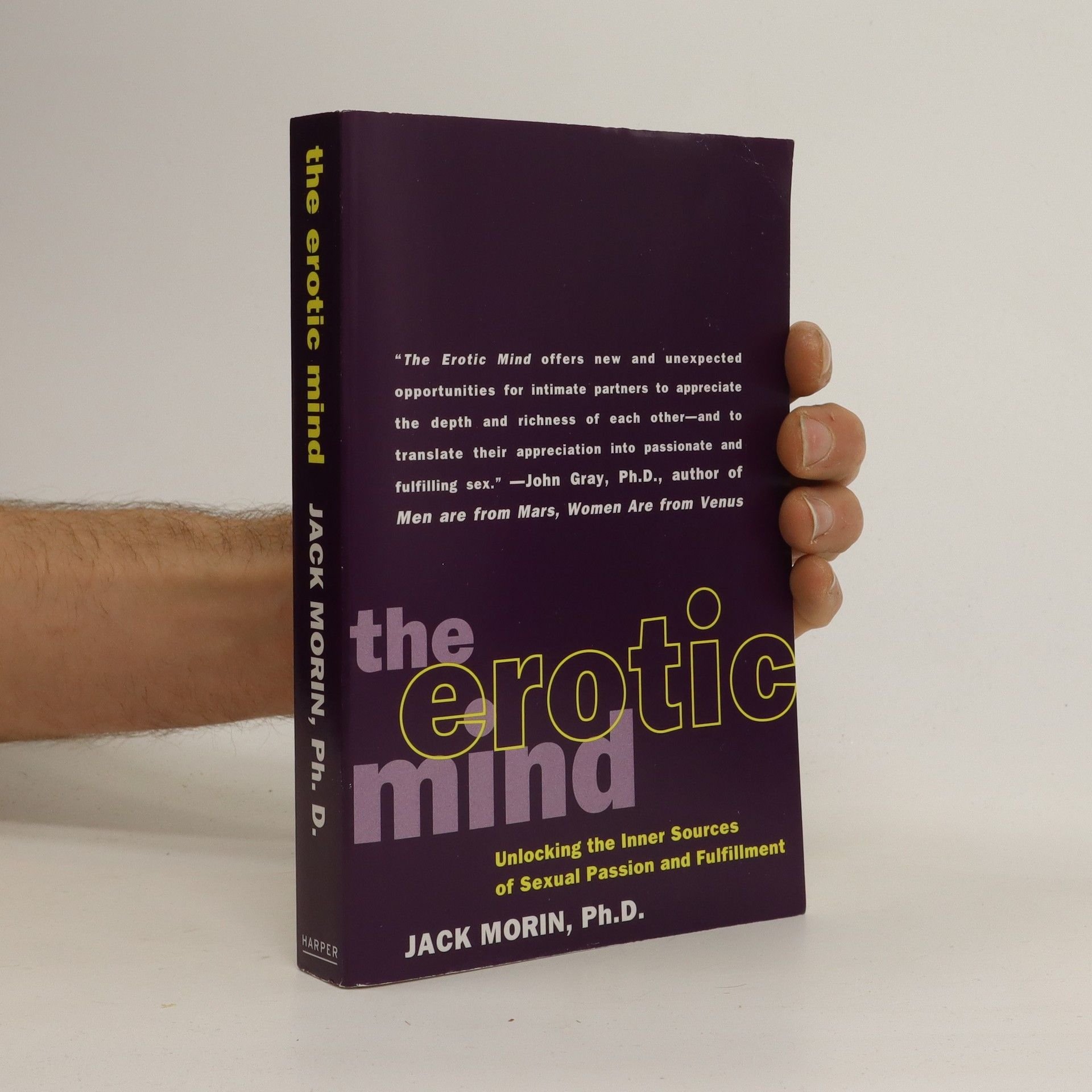
The Erotic Mind by Jack Morin is a game changer when it comes to gay sex addiction healing
A Somatic Approach to Gay Sex Addiction: Why Your Body Holds the Key
Talk therapy is valuable. I've benefited from it enormously in my own life, and many of my clients come to me having already done important work with therapists and counsellors. Cognitive understanding is really key.
But I've observed over and over again that you can understand your patterns intellectually and still feel completely unable to change them. You can know exactly why you reach for your phone at 2am and still do it anyway. Insight alone does not rewire the nervous system.
This is where Somatic Sexology and Somatic Erotic Bodywork enters the picture. It can help with premature ejaculation, resolve erectile dysfunction issues and all kinds of other problems compulsive habits can cause.
Somatic Sex Therapy engages the body directly. The nervous system, the breath, the musculature, the erotic energy itself. Through practices like breathwork, conscious touch, Taoist Erotic Massage and mindful self-pleasure, you access and shift patterns that are held in your body at a level that words alone cannot reach.
In Sexological Bodywork training (I trained with the School of Somatic Sexology under Kian de la Cour), we learn that the client's body holds its own intelligence. The felt sense, as psychologist Eugene Gendlin called it, often knows things the conscious mind hasn't caught up with yet.
For gay men dealing with compulsive sexual patterns, somatic work offers something uniquely powerful; the direct, embodied experience of a different relationship with arousal. Instead of arousal as a runaway train that you either ride compulsively or try to suppress entirely, you learn to be present with it. To breathe with it. To feel it moving through your whole body rather than concentrating in your genitals and rushing towards release.
And when a man experiences, in his own body, that arousal can be expansive, sustained, nourishing and under his conscious direction rather than controlling him, something profound shifts. The compulsive pattern loses its grip, because the nervous system has discovered a new option.
Learn more about Somatic Sex Therapy and Sexological Bodywork
Taoist Erotic Practices: Ancient Wisdom for a Modern Problem
The Taoist approach to sexual energy is perhaps the most counterintuitive element of this work for men who have been told they need to control or reduce their sexuality.
Taoism doesn't see sexual energy as a problem. It sees it as one of the most powerful forces available to a human being; a source of vitality, creativity, health and spiritual connection. The issue isn't that you have too much sexual energy. The issue is that you haven't learned how to circulate it.
Most men (gay or straight) have been masturbating the same way since adolescence. Fast, goal-oriented, genitally focused, tension-based and culminating in ejaculation as quickly as possible. This pattern trains the nervous system to associate arousal with urgency and release. Over time, the capacity for sustained, full-body pleasure narrows.
Taoist Erotic practices reverse this. Through breath, sound, movement and conscious self-touch, you learn to build arousal slowly, to circulate that energy through your entire body rather than concentrating it in your genitals, and (for those who choose) to experience orgasmic states without ejaculation, preserving and redirecting the energy rather than depleting it.
For men dealing with compulsive patterns, this is transformative. The practices give you a completely new way of relating to your own arousal. Self-pleasure becomes a conscious, intentional practice rather than a compulsive, numbing habit. You start to experience more pleasure, more sensation and more aliveness with less frequency, because each encounter with your own erotic energy becomes richer and more nourishing.
What Gay Sex Addiction Healing Actually Looks Like
This work is not a quick fix. There is no seven-day programme that will resolve patterns that took decades to form (though my Masturbation Mastery course is a powerful starting point for many men).
Real healing from compulsive sexual patterns involves several layers working together.
The first layer is awareness: learning to recognise your triggers, your cycle and the nervous system states that drive the behaviour. This is where cognitive work (including hypnotherapy, which I use extensively) is invaluable.
The second layer is somatic rewiring: giving your body a new experience of arousal, pleasure and sexual energy through practices like conscious breathing, Taoist erotic techniques and mindful self-pleasure. This is where the body-based work creates changes that talk therapy alone often can't.
The third layer is erotic integration: rather than splitting your sexuality into "good" parts and "bad" parts, you learn to bring all of it into consciousness. Your fantasies, kinks, desires and patterns become doorways to self-understanding rather than sources of shame. This is the Jack Morin, Core Erotic Theme work that I weave through everything I do.
The fourth layer is community and connection: isolation feeds compulsion. Finding spaces where you can relax be yourself, and disconnect from sex being the only currency available.
This is why I created Pleasure Medicine, a non-sexual community workshop for gay and queer men, and why I believe so strongly in the power of men doing this work alongside other men.
These layers don't happen in a neat sequence. They overlap, circle back and deepen over time. But the direction is always the same: towards more freedom, more presence, more pleasure and less shame.
![Somatic sex coaching and healing for gay men in London and online]](https://images.squarespace-cdn.com/content/v1/69335ca8af8ace782b10dcf6/1776182455278-HRMV9BQEIG7G35XGUH2X/somatic-sex-healing-gay-men-london.jpg)
The Erotic Evolution Method helps gay sex addiction
How I Work With This
If this article has resonated with you, here's what working with me looks like.
I offer one-to-one sessions (in person at my private studio in Hackney, East London and online worldwide) that combine Clinical Hypnotherapy, somatic sex coaching and erotic energy work. The approach is tailored entirely to you, drawing from the Erotic Evolution Method: three integrated pillars addressing your Sexual Subconscious (the beliefs and programming driving your patterns), your Sexual Somatics (how your body holds and expresses arousal) and your Erotic Rewiring (your relationship with fantasy, desire and pleasure).
A free Connection Call is the starting point. It's a relaxed, honest conversation about where you're at and whether this approach feels right for you.
I also offer Masturbation Mastery, a 7-day guided self-pleasure course that teaches Taoist erotic techniques and conscious masturbation practices. For many men, this is the first step towards changing their relationship with self-pleasure from a compulsive habit to a conscious, nourishing practice.
Frequently Asked Questions
Is gay sex addiction a real diagnosis?
Sex addiction is not a recognised diagnosis in the DSM-5, the diagnostic manual used by psychiatrists and psychologists. The World Health Organisation introduced Compulsive Sexual Behaviour Disorder (CSBD) in the ICD-11, but classified it as an impulse control disorder rather than an addiction. This distinction reflects the growing clinical consensus that compulsive sexual patterns are better understood through a behavioural and psychological lens than through the addiction model.
Can gay men be sex addicts?
Gay men can absolutely experience compulsive sexual behaviour that feels out of control and causes distress. However, applying the "addiction" label can be particularly harmful for gay men because it risks pathologising healthy sexual expression and reinforcing the shame that often drives the compulsive cycle in the first place. A more helpful framing is to explore what emotional needs the behaviour is meeting and what the nervous system is trying to regulate.
What causes compulsive sexual behaviour in gay men?
Compulsive sexual patterns in gay men are typically driven by a combination of factors: internalised shame from growing up in homophobic environments, nervous system dysregulation (using arousal to manage stress, loneliness or anxiety), unprocessed trauma, attachment wounds, and the absence of healthy models for gay intimacy and sexuality. The behaviour is usually a symptom of these deeper issues rather than a standalone disorder.
How is somatic sex therapy different from regular therapy for sex addiction?
Traditional therapy for compulsive sexual behaviour is typically talk-based: exploring thoughts, behaviours and cognitive patterns. Somatic sex therapy works directly with the body, using breathwork, conscious touch, erotic energy practices and nervous system regulation to shift patterns at a physical, embodied level. Many sexual patterns are held in the body (muscular tension, restricted breathing, habitual arousal pathways) and respond to body-based approaches in ways that insight alone often cannot achieve.
Can you help me with compulsive sexual behaviour online?
Yes. While in-person somatic work offers a unique depth, a significant amount of this work can be done effectively online. Hypnotherapy, erotic coaching, guided self-pleasure practices, breathwork and cognitive restructuring all translate well to online sessions. I work with clients worldwide via video call.
What is the Erotic Evolution Method?
The Erotic Evolution Method is my integrated approach to sexual healing for gay men. It combines three pillars: Sexual Subconscious (using hypnotherapy to uncover and reprogram the beliefs driving your patterns), Sexual Somatics (body-based practices to rebuild your relationship with arousal, sensation and pleasure) and Erotic Rewiring (working consciously with your fantasies, desires and erotic energy as tools for self-understanding and transformation).
Where are you based?
I work from my private studio in Hackney, East London (E5 0LP), close to Homerton, Clapton and Hackney Downs stations. Online sessions are available worldwide.